What You Need to Know About Platelet-Rich Plasma (PRP) Treatment for Hair Loss
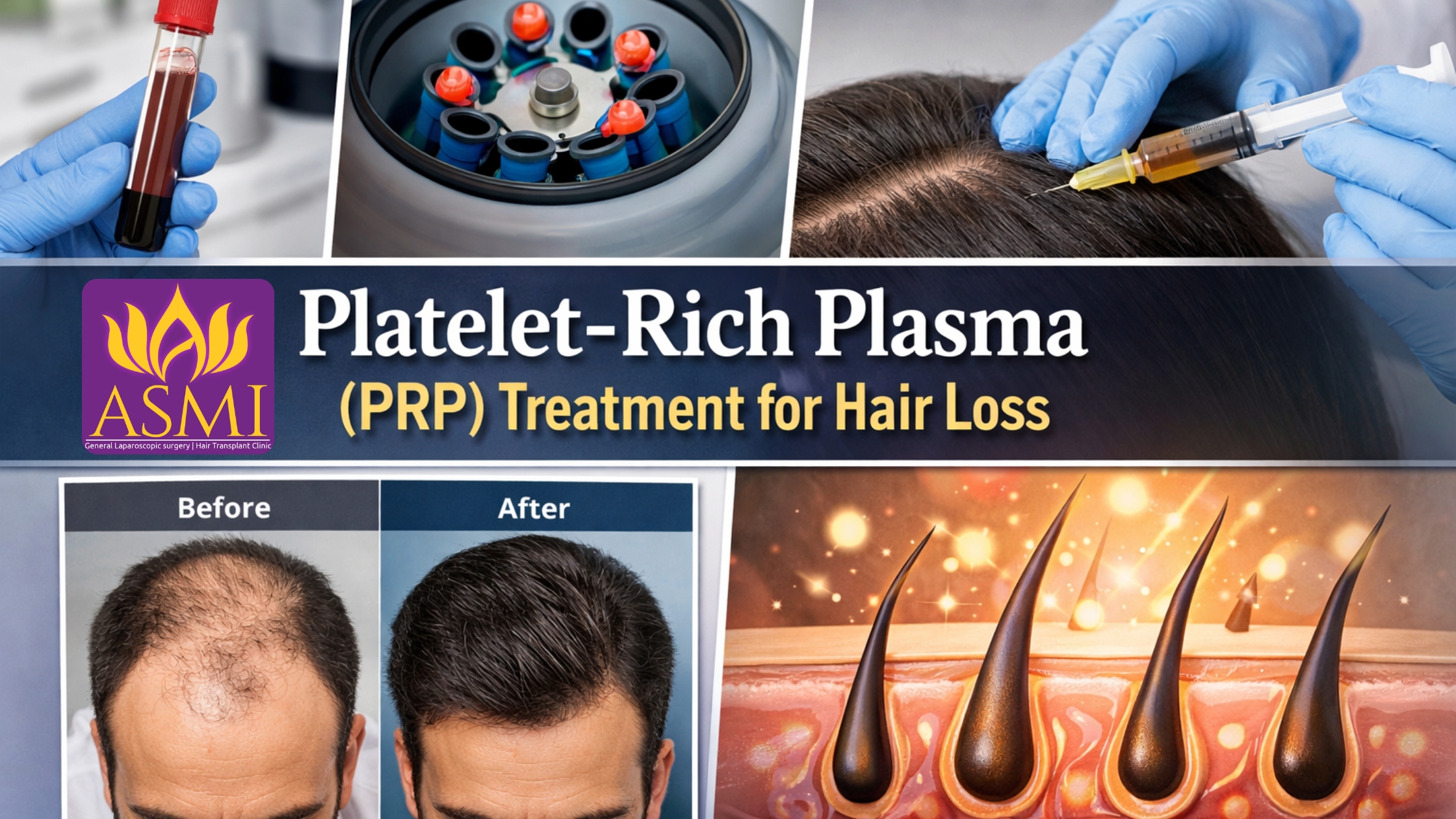
Platelet-Rich Plasma (PRP) Treatment for Hair Loss
Hair loss is a growing concern among both men and women, often affecting confidence and quality of life. While several treatments claim to reverse hair thinning, Platelet-Rich Plasma (PRP) therapy has emerged as one of the most effective non-surgical solutions for hair restoration.
In this blog, we explain what PRP treatment is, how it works, who it’s for, and what results you can expect, along with frequently asked questions.
What Is Platelet-Rich Plasma (PRP) Therapy?
PRP therapy is a regenerative treatment that uses your own blood to stimulate hair growth. Blood platelets contain growth factors that help repair tissues, improve blood circulation, and activate dormant hair follicles
When injected into the scalp, PRP helps:
- Strengthen existing hair follicles.
- Reduce excessive hair fall.
- Improve hair thickness and density.
- Promote new hair growth.
- Since PRP is derived from your own blood, it is safe, natural, and minimally invasive.
How Does PRP Treatment Work for Hair Loss?
- PRP treatment is a simple outpatient procedure that involves three steps: Blood Collection, Platelet Separation, and Scalp Injection.
- Blood Collection : A small amount of blood is drawn from your arm.
- Platelet Separation : The blood is processed in a centrifuge to extract platelet-rich plasma.
- Scalp Injection : The PRP is injected into areas of thinning hair using fine needles.
- The procedure typically takes 45–60 minutes, and patients can resume normal activities the same day.
Who Is an Ideal Candidate for PRP Hair Treatment?
- PRP therapy is best suited for individuals with:
- Early-stage hair loss
- Hair thinning
- Androgenetic alopecia (male or female pattern hair loss)
- Excessive hair fall
- Post–hair transplant recovery needs
- PRP may not be effective for fully bald areas where follicles are inactive.
Benefits of PRP Treatment for Hair Loss
- Non-Surgical & Minimally Invasive
- Uses the body’s natural growth factors
- No risk of allergy or rejection
- Improves hair quality and density
- Enhances results of hair transplant or GFC therapy
- Minimal downtime
How Many PRP Sessions Are Required?
- Most patients require:
- 3–4 initial sessions spaced 4–6 weeks apart
- Maintenance sessions every 6–12 months
- The exact number depends on the severity of hair loss and individual response.
When Will You See Results?
- Hair fall reduction: 4–6 weeks
- Improved hair texture: 2–3 months
- Visible regrowth: 3–6 months
Results improve gradually and look completely natural.